
" height="27px" id="TmfUJaOY1" width="27px"/></svg>)
" height="27px" id="nRjU8rtQC" width="27px"/></svg>)
" height="27px" id="rDyl5ps1z" width="26px"/></svg>)
The 3 hidden barriers to training that keep course completion rates low
Ervy Team
5 min read
" transform="translate(5 12)" width="29px"/></svg>)
Look, most L&D teams know their completion rates are terrible. Industry benchmarks land somewhere between 20-30% for corporate e-learning. If you’re in that range, you’ve probably tried everything to overcome the barriers to training: better content, interactive learning experiences, gamification, reminder emails, tying completion to performance reviews.
Some of it helps at the margins, yet none of it really solves the problem.
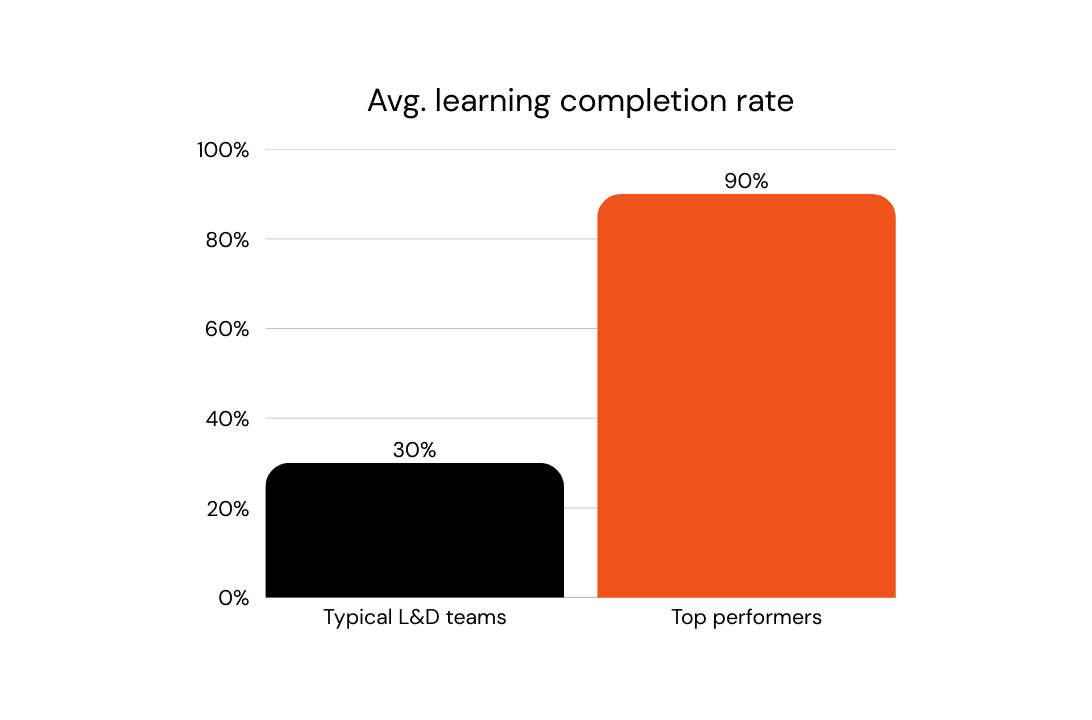
Here’s the uncomfortable question: what’s the difference between organizations stuck at 30% and the handful consistently hitting 90%+?
It’s not always content quality; plenty of organizations with low course completion rates have excellent courses. It’s not budget. And it’s not employee motivation. The same people who ignore mandatory training will spend hours learning new skills on YouTube.
So what is it?
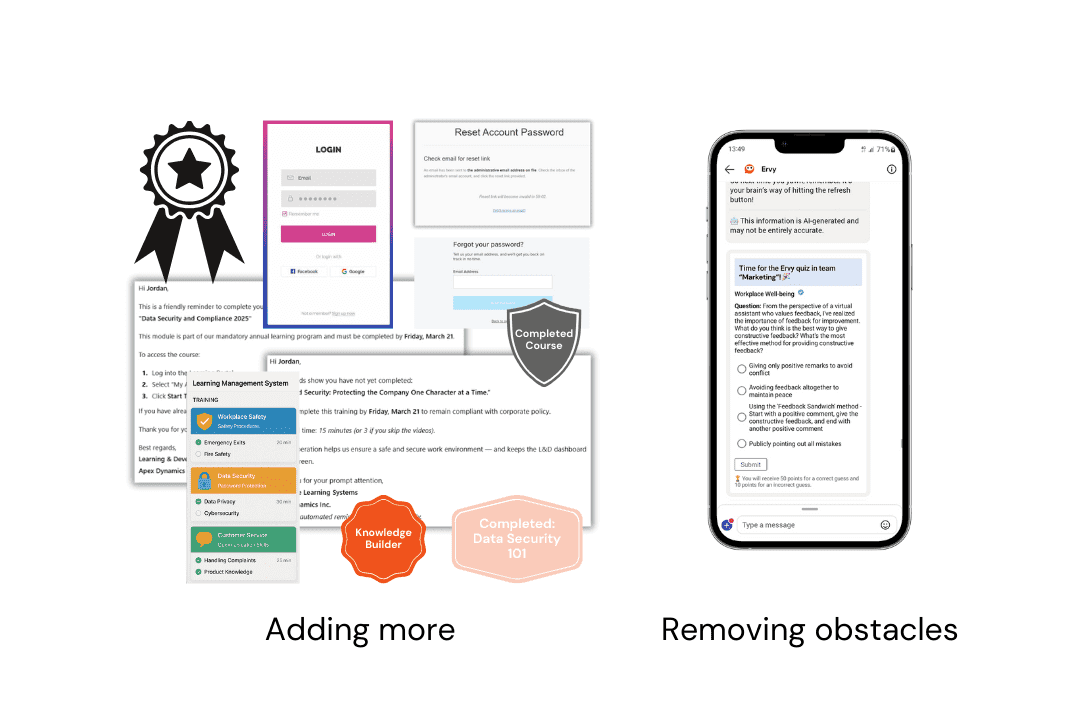
In some cases the pattern is obvious: it’s about access, not content. The ones with high completion have systematically removed barriers between employees and learning. The ones with low completion keep adding friction, then act surprised when people don’t push through it.
Why course completion rates matter
Low completion creates problems beyond just the metrics. Compliance gaps mean audit risk. Your L&D team spends hours chasing people instead of building better programs. New hires take longer to get productive. And eventually, learning becomes something people actively avoid, while the ROI of training initiatives tanks.
The real question: what if the problem isn’t employee culture? What if you could improve course completion rates by simply changing how you deliver training?
Why employees don't finish training
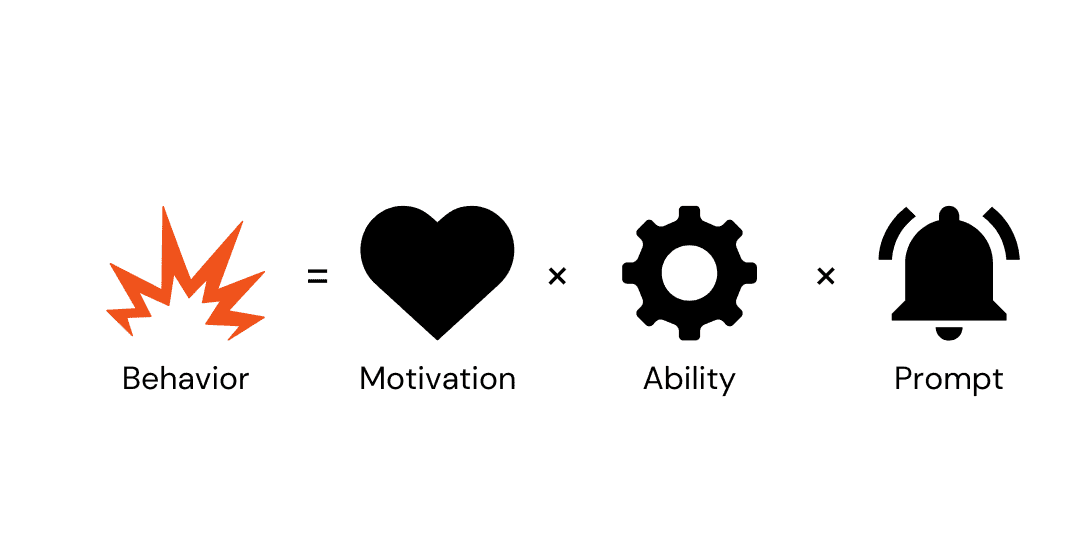
There’s a behavioral model from Stanford researcher BJ Fogg that explains this perfectly: Behavior = Motivation × Ability × Prompt.
For any behavior to happen (like completing training), three things need to line up at the same time:
Motivation (wanting to do it)
Ability (how easy it is)
A prompt (something that triggers you to act)
Most organizations obsess over motivation and create more employee training incentives. Make the content engaging! Add gamification! Offer certificates!
But here’s the thing: motivation is unreliable. Even someone who desperately wants to learn new compliance procedures can’t do it if they need to remember a separate login, find 45 uninterrupted minutes, navigate through five menu layers, and pray the platform doesn’t crash.
Their motivation dies before they even start.
Ability beats motivation every single time. When something is easy enough, people do it even without strong motivation. That’s why one-click “purchasing” works; the friction is so low that you barely need to want the thing.
To understand what will improve training completion rates, think about when employees actually complete training:
When they need it right now (not three months before they’ll use it)
When it’s very simple (not buried six clicks deep)
When it’s immediately relevant to their job (not generic corporate content)
Most corporate training is designed with high friction. Then we blame employees for not being “engaged enough” to overcome it.
The 3 barriers to training
Access friction
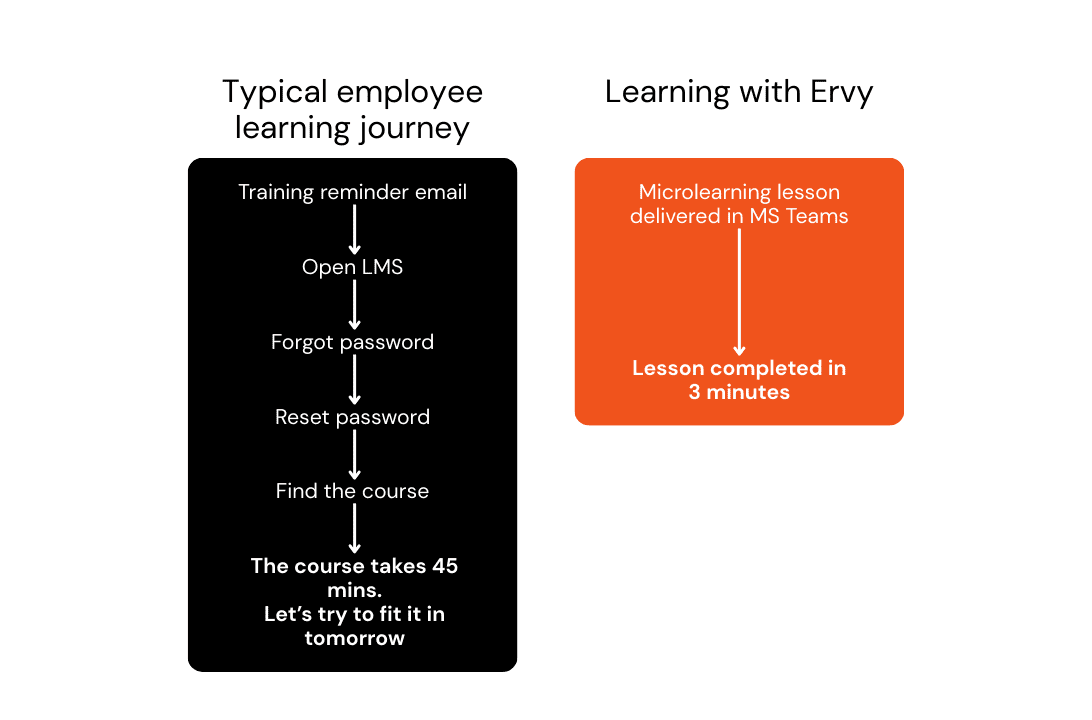
Picture the typical journey. Employee gets an email notification. Adds “complete training” to their mental to-do list. Gets pulled into actual work. Gets another reminder email. Finally clicks the link. Realizes they need to log in. Can’t remember the password. Resets it. Logs in. Navigates through menus. Finds the course. Sees it requires 45 minutes they don’t have right now. Closes the window. Tells themselves they’ll come back later.
They don’t.
What you can do: Deliver training in tools people use every day. If your team lives in Teams or Slack, put the training there. No separate login. No “remember to go do this thing somewhere else.” Training just appears where work happens.
Why it works: There’s a concept from cognitive science called “cognitive load”. Basically, your brain can only handle so much at once. Traditional training platforms create what researchers call “extraneous load.” You’re burning mental energy remembering to access training, navigating unfamiliar interfaces, switching from “work mode” to “learning mode.”
All that effort should be going toward actually learning. When you remove the access friction, that’s exactly what happens.
Time anxiety
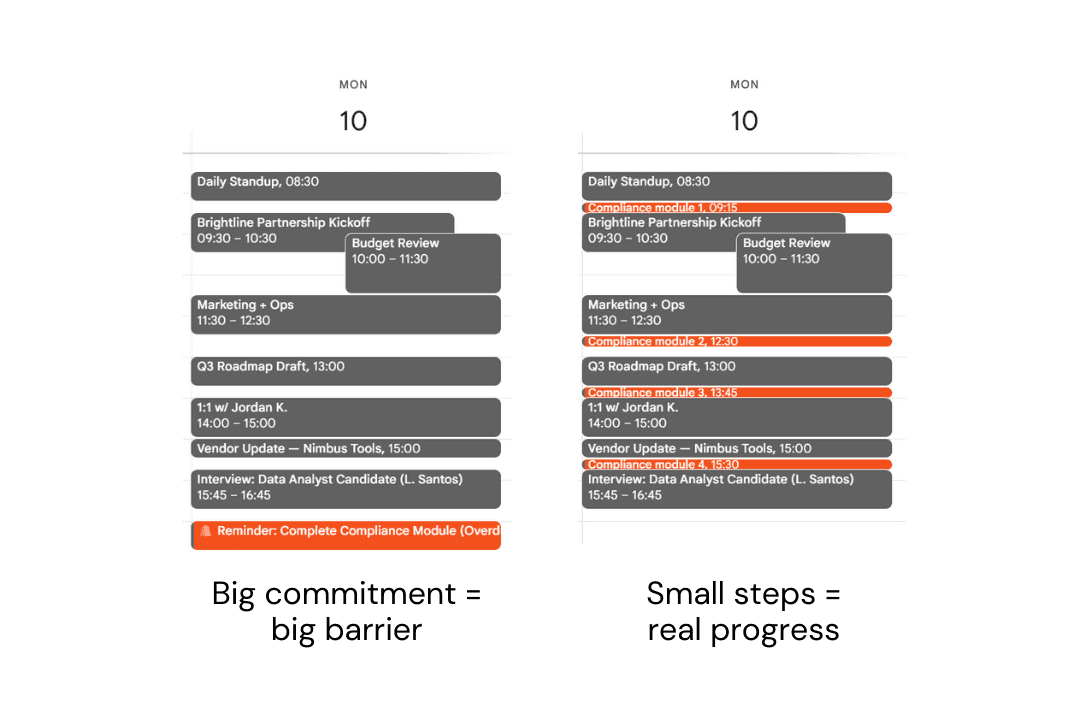
Most training courses run 45-60 minutes. You tell people to “set aside time.” They never do.
What you can do: Break everything into 10-minute chunks (the microlearning approach). To increase training completion rates, make it something people can finish during a coffee break. Remove the mental blocker of “I need to find time for this massive thing.”
Why it works: Your brain can focus intensely for short bursts. Extended attention on one task drains cognitive resources fast. Breaking content into small pieces isn’t dumbing it down, rather working with how brains actually process information, not against it, thus multiplying the impact of training.
And there’s a psychological shift happening here. We used to “go check email” by logging into a specific program. Now communication is ambient: notifications appear wherever you are, you respond in seconds, done.
Learning is moving the same direction. Stop thinking about learning as a destination (“go to the platform”). Start thinking about it as ambient (“learning comes to you”).
Relevance gaps
Generic corporate training fails universally. You can’t force engineers to complete sales training. You can’t make salespeople sit through IT security protocols that don’t apply to their daily work.
What you can do to overcome this barrier to learning: Match training to roles and immediate needs. Sales teams get objection handling. Engineering teams get technical documentation. Customer service teams get de-escalation techniques. Nobody gets stuff that doesn’t apply to them.
LinkedIn’s 2024 research found that irrelevant training is one of the biggest barriers to employee development. Not surprising; people finish training only when they can use it immediately.
Relevance isn’t a bonus feature here. It’s the difference between “I’ll do this later” (translation: never) and “I need this information right now” (gets done immediately).
The real fix to common training barriers: stop adding, start removing
Here’s the counterintuitive part: you don’t fix low completion by adding more tactics. You fix it by removing obstacles.
Remove separate logins. Deliver training where people already work. Remove time requirements. Make modules under 10 minutes. Remove irrelevant content. Match training to actual job needs. Remove the one-and-done approach. Build in repetition over time. Remove pushy reminder emails. Make training available when people need it.
One important note on metrics: Learning completion rates matter, but they don’t tell the whole story. Plenty of people click through training without absorbing anything.
The better question: did behavior actually change?
If you’re doing cybersecurity training: are phishing click-rates going down? Sales training: are conversion rates improving? Customer service training: are satisfaction scores rising?
If completion is up but behavior is flat, you’ve optimized for the wrong thing.
What this means for your company?
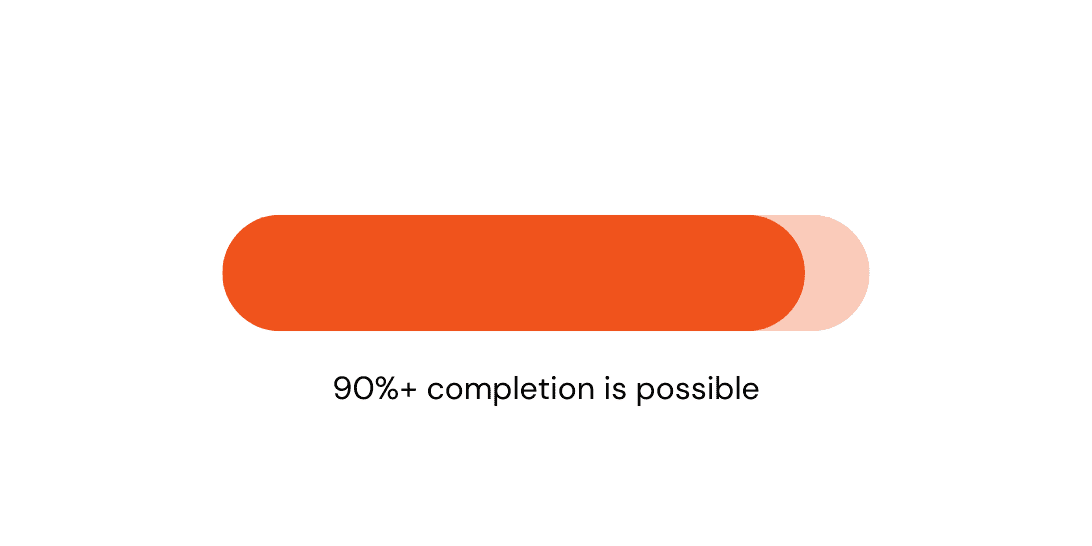
Some organizations are hitting 90%+ course completion rates. Others are stuck at 20-30%. The difference isn’t always budget, content quality, or which generation your employees belong to. Sometimes it’s the delivery design.
Your employees don’t necessarily hate learning. They hate friction, wasting time on irrelevant content, and feeling like training is just another thing piled onto their already-full plate.
Fix those problems, and completion takes care of itself, while your training ROI soars.
Where to start:
Pull your completion rates by department and course. Look for patterns. Where are the biggest drop-offs?
Pick one training program that matters. Ask yourself: how could we deliver this where people already work? What if it was 8 minutes instead of 45? Who’s getting content that doesn’t actually apply to their role?
Test one change. Measure what happens. Compare it to your baseline.
If it works, do more of it. If it doesn’t, test other changes from the list.
If you’re dealing with completion rate problems and want to talk through how to remove the barriers to training holding your team back, we’re around.